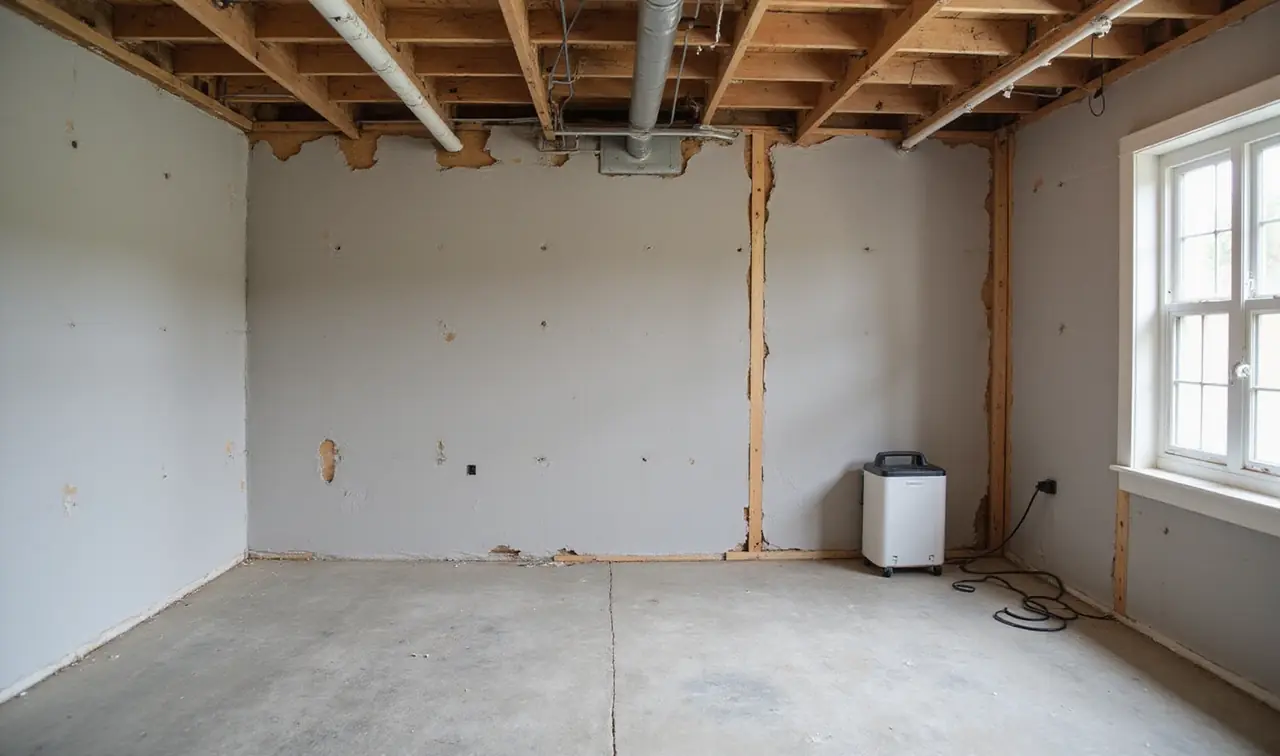
Water damage restoration in Layton typically takes 3 to 5 days for drying and 1 to 3 weeks in total when drywall, flooring, or cabinets also need to be rebuilt. A small, clean leak caught early can be dry in 2 to 3 days, while a flooded finished basement or a sewage loss can run past two weeks before everything is back in place. This post breaks the timeline into stages, shows what slows a job down, and explains how to read the numbers on your own moisture log.
How long does water damage restoration take from start to finish?
Water damage restoration takes about 3 to 5 days for the drying phase and up to several weeks for the full project, depending on how far the water spread and what it soaked. Drying and rebuilding are two different clocks, and people often mix them up.
Water damage restoration is a process that removes water, dries the structure to a measured standard, and repairs or replaces damaged materials after a flood, leak, or pipe failure. The drying part is the fast part. Rebuilding depends on materials, ordering, and schedules.
- Small clean leak, one room: 2 to 3 days of drying, little or no rebuild.
- Burst pipe, several rooms: 3 to 5 days of drying, 1 to 2 weeks of repairs.
- Finished basement flood: 4 to 7 days of drying, 2 to 4 weeks or more with rebuild.
- Sewage backup: 3 to 5 days of drying after cleanup and removal, and a longer rebuild.
These ranges are general industry figures, not promises. Your own timeline depends on the loss.
What are the stages of water damage restoration?
The stages of water damage restoration are assessment, water removal, drying, cleanup, and repair, and each one has its own typical length. Knowing the sequence helps you spot where a job is stuck.
- Assessment, at the start of work. The crew maps where water went with moisture meters and, in many cases, a thermal camera.
- Water removal, a few hours to a day. Pumps and extractors pull standing water. This is the stage covered by Water Extraction in Layton, and speed here shortens everything after it.
- Drying, 3 to 5 days. Air movers and LGR dehumidifiers pull moisture out of materials and the air.
- Cleanup and sanitizing, 1 to 2 days. Affected surfaces are cleaned, and damaged materials are removed and bagged.
- Repair and rebuild, days to weeks. New drywall, paint, flooring, and trim go in only after the structure reads dry.
Skipping ahead is the biggest cause of repeat problems. Closing up a wall that still reads wet is how a clean-looking room grows mold.
What makes water damage restoration take longer?
Water damage restoration takes longer when the water spread into walls or insulation, when the water was contaminated, when materials are dense, or when mold has already started. Four factors explain most delays.
- Time before drying starts. Each day of delay lets water wick higher into drywall and soak deeper into wood.
- Water category. Clean supply water dries on a standard schedule. Sewage or flood water adds removal steps before drying begins.
- Material type. Hardwood, plaster, and thick subfloors hold water longer than carpet and thin drywall.
- Humidity and temperature. Cold, damp air slows evaporation. Drying equipment compensates, but a cold November basement can add a day.
Mold adds its own step. Growth can begin in 24 to 48 hours in damp material, and if it has, Mold Remediation in Layton becomes part of the schedule.
How long does a flooded basement take to dry in Layton?
A flooded basement in Layton usually takes 4 to 7 days to dry, longer than a ground-floor room, because concrete slabs and below-grade walls release moisture slowly. Finished basements with carpet, framing, and drywall take the longest.
Many central Layton homes from the 1970s through the 1990s have finished basements with wood framing against concrete. Wet insulation and bottom plates can hide water well after the carpet feels dry.
Homeowners in nearby towns see the same pattern. A basement call for Basement Flood Cleanup in Layton follows the same steps as one in Kaysville, where homes along the benches often have basements dug into hillside soil. See also Water Damage Restoration in Kaysville for how local conditions change the job.
Does winter change how long restoration takes?
Winter changes water damage restoration in Layton by slowing drying and adding delays from frozen ground, closed materials suppliers, and busy seasons. A burst pipe in November or December often means one extra day of drying compared with summer.
Cold air holds less moisture, so dehumidifiers in unheated spaces work harder. Crews often raise the room temperature during drying, usually to the range of 70 to 80 degrees, because warmer air pulls moisture from materials faster.
After a hard freeze, several homes in a neighborhood can fail at once. That is true in Centerville too, where Water Damage Restoration in Centerville calls pile up on the first cold snap, and scheduling can stretch the timeline.
How do you know water damage is actually dry?
You know water damage is dry when moisture readings in the affected materials return to the dry standard set from an unaffected area of your home, not when the surface feels dry. Readings are taken at the same points every day.
A moisture meter on drywall, for example, may read well above the normal range at the start and fall each day. When readings match the dry baseline, the equipment comes out. The daily log is your proof for the insurer and for a future buyer.
If a company removes equipment on a fixed day without final readings, ask for the numbers. A job that is dry on paper and wet in the wall costs more later.
What does a day-by-day timeline look like for a burst pipe loss?
A typical burst pipe loss in a Layton home runs about a week from first call to dry structure, with repairs after that. Picture a split line in a second-floor wall after a hard freeze, with water reaching the kitchen below.
- Day 1: The water is shut off, standing water is extracted, and wet insulation and soaked drywall are cut out if needed. Drying equipment is set.
- Day 2: Moisture readings are taken and equipment is repositioned toward the wettest areas.
- Days 3 and 4: Readings fall steadily. Dehumidifiers pull moisture from the air, and wall cavities continue to dry.
- Day 5: Final readings are compared to the dry standard, and equipment is removed if the numbers are met.
- Week 2 and beyond: Insulation, drywall, texture, paint, and flooring go back in.
If readings are still high on day 5, drying simply continues. That is normal, and it is better than closing up a wet wall.
Does insurance change the restoration timeline?
Insurance changes the restoration timeline mainly through adjuster visits, approvals for larger repairs, and documentation requests, not through the drying itself. Drying can and usually should start before the adjuster arrives.
Photos, moisture logs, and a list of removed materials speed approvals. Rebuild work often waits on the claim decision, which can add days or weeks depending on the size of the loss and how quickly paperwork moves.
That is one reason the water removal and drying stage is worth starting immediately. It is the only part of the job where each day you wait makes the later parts bigger.
Common mistakes that stretch the timeline
The most common mistake that stretches a restoration timeline is waiting. A leak that is cleaned up the first day can dry in 2 to 3 days. The same leak found a week later can need demolition.
- Waiting for an insurance adjuster before starting water removal.
- Turning off drying equipment early because of noise or the electric bill.
- Rebuilding before moisture readings reach the dry standard.
- Using household fans instead of commercial air movers and dehumidifiers.
- Opening windows on a cold day, which brings in damp winter air.
- Moving equipment around the house without a restoration crew checking the readings.
Speed after the loss is what you control. Early Water Mitigation in Layton is what keeps a loss on the short end of every range above.
When to call a professional
You should call a professional as soon as water reaches carpet, drywall, or a basement slab, because the first 24 to 48 hours decide how long everything takes. A damp floor you can wipe up is one thing. Water soaking into building materials is a restoration job.
Water Cleanup Layton connects you with an independent local restoration company that can start the drying process, so the timeline begins on day one rather than day five.
Frequently Asked Questions
Here are the timeline questions Layton homeowners ask most often.