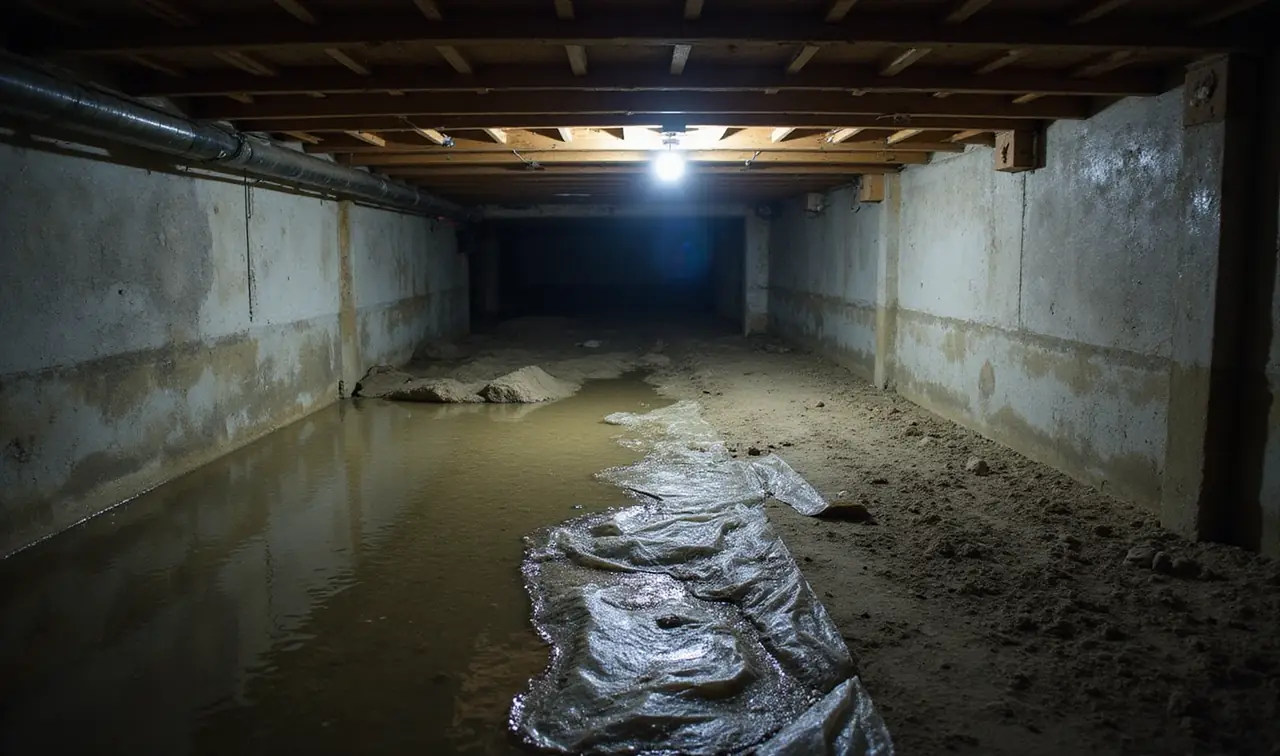
Standing Water Pump Out
Submersible pumps and hoses remove pooled water through a vent or access door. Crews discharge water away from the foundation so it does not run back under the house.
Call now to speak to a specialist
Call (385) 481-3042A crawl space job goes beyond running a pump. The restoration company you are connected with handles water-related work under the house, and larger repairs such as new vapor barrier installation or drainage changes may be a separate stage. Here is what the work generally covers.
Submersible pumps and hoses remove pooled water through a vent or access door. Crews discharge water away from the foundation so it does not run back under the house.
Saturated batts and wet duct wrap are removed and bagged. Leaving them in place keeps moisture against the subfloor, which can delay drying by days and invite mold.
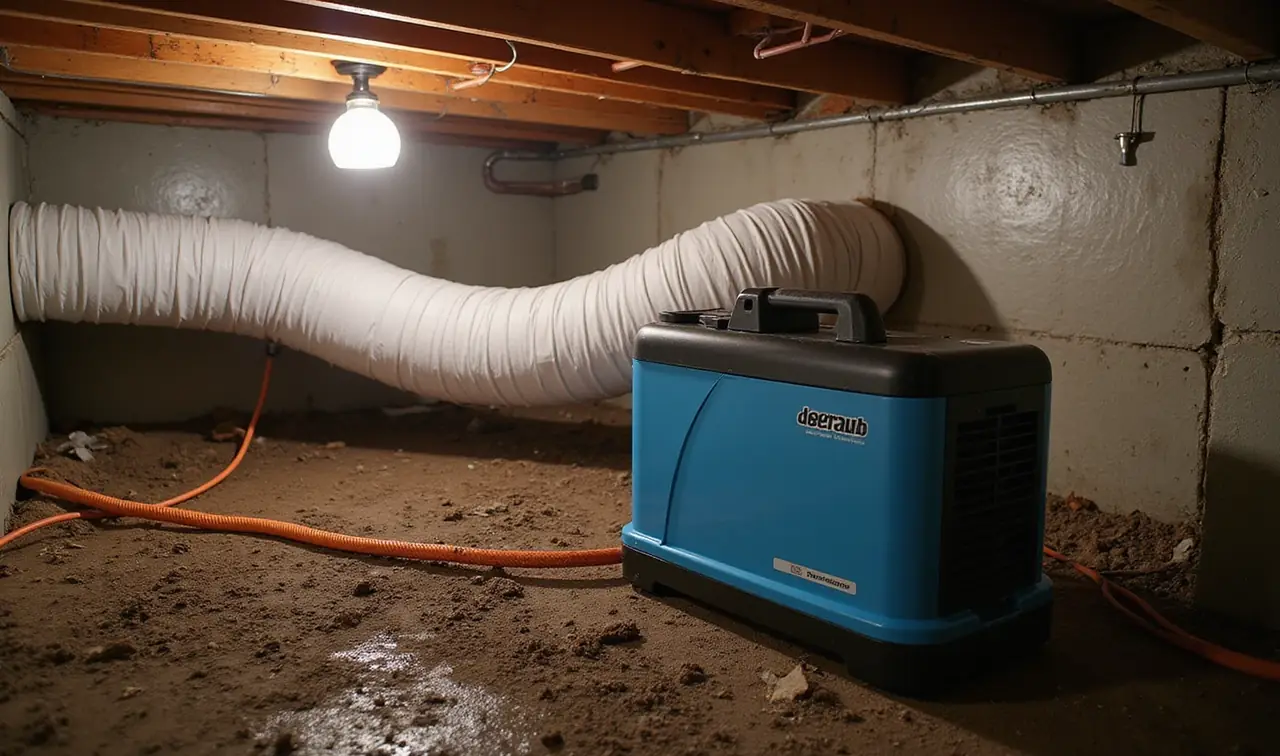
Air movers and a dehumidifier dry joists, subfloor and the soil surface. Meter readings are checked daily so equipment stays only as long as the wood needs it.
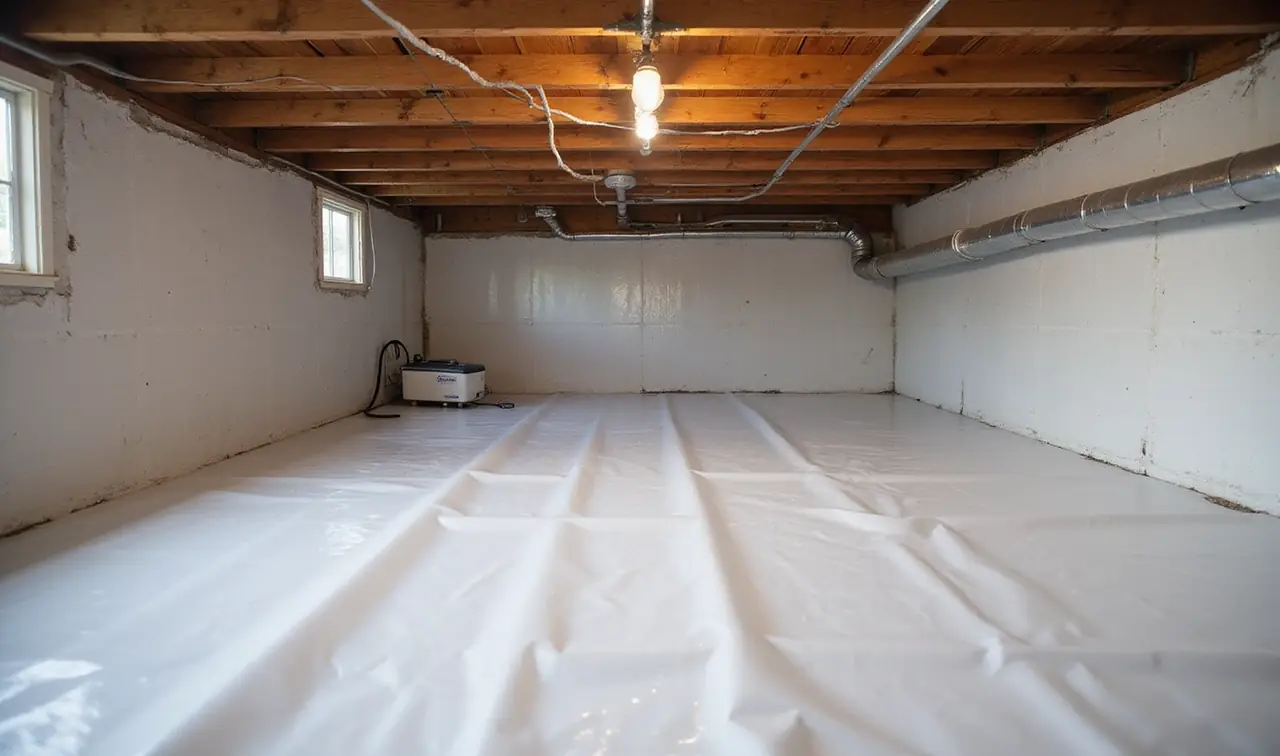
Torn or missing sections of vapor barrier are identified, and replacement with overlapped, sealed sheeting can be done once the space is dry. This is the step that helps keep ground moisture from returning.
Crawl Space Water Removal in Layton is a specialized water damage service that pumps standing water out of the low, enclosed space under a home and dries the joists, subfloor, insulation and soil surface so moisture does not climb into the living area. Crawl spaces are typically 18 to 36 inches tall, so crews work on their backs or knees with submersible pumps and hoses run out through a vent or access door. Water here is rarely only water. It often carries soil, and it sits against wood framing that stays wet for weeks if nobody dries it.
Layton has plenty of crawl spaces, especially under older central Layton homes and some additions. Water gets in through foundation vents during snowmelt off the foothills, through a split supply line in winter, from a failed sump or from a high water table near Kays Creek and the lower west side. Because nobody looks under the house often, standing water can sit for weeks. Crawl space water removal in Layton is usually discovered by a musty smell, a cold or soft floor above, or a utility bill that does not make sense.
Crawl space jobs follow a different order than a flooded living room, because the work happens in a tight, low space with limited airflow. Here is how a typical job unfolds once you call and are connected with a local crew.
Call
Call (385) 481-3042 and say what happened, where you are and whether the water has stopped.
Get connected
We connect you with an independent local restoration company that serves your area.
The work
The company you are connected with inspects, explains scope and timing, and does the work with you directly.
Keep records
Ask the company for moisture readings and photos so you have a record for your insurer.
Submersible utility pumps
Low-profile pumps sit in standing water in spaces under 3 feet tall and move water out through hoses without crews carrying heavy equipment through tight access hatches.
Wood moisture meters
Pin-type meters read moisture content in joists and subfloor, so crews know when the framing is back near its normal range of roughly 12 to 15 percent.
Compact LGR dehumidifiers
Smaller refrigerant dehumidifiers fit through access doors and pull moisture from the air and wood, which matters in enclosed spaces with little natural airflow.
Polyethylene vapor barrier
A 6 mil or thicker sheet laid over the soil blocks ground moisture, with overlapped, sealed seams and edges run a few inches up the foundation wall.
IICRC S500 water damage standard
The S500 is the industry reference for classifying water category, setting drying goals and documenting progress. It guides how crews treat soil-contaminated crawl space water and when drying is considered complete.
Source-first assessment
Crews look for how water entered before drying, whether from a pipe, a vent, grading, or groundwater. Drying a space that keeps flooding does not solve the problem.
Moisture mapping
Readings are logged at set points across joists, subfloor and soil each day. The map shows where moisture lingers, so equipment is placed there and not guessed at.
01
What we do: The restoration crew pumps out the water, removes wet insulation, and sets air movers and a dehumidifier to dry the joists. They check where water entered and whether grading directs water toward the foundation.
→ The space is dry in about a week, and you know where water entered so you can fix grading or vents.
02
What we do: The crew pumps water from the crawl space, removes wet batts, and dries the subfloor. A plumber repairs the line, and the crew confirms the joists read dry before insulation goes back in.
→ The floor stays in place, the smell fades, and the pipe is insulated against the next hard freeze.
03
What we do: After pumping and drying, the crew removes the failed barrier and sets up the space for a new sealed polyethylene liner. Drainage and vents are checked for the source of moisture.
→ A sealed barrier sits over dry soil, and humidity in the space drops to a normal range.
Layton homes have many crawl spaces, especially under older central Layton houses, additions and some basement-and-crawl combinations. The city sits below the foothills, so spring snowmelt and heavy rain push water downhill toward foundations in East Layton and across the benches. On the lower west side, near the Great Salt Lake flats, a higher water table can keep soil damp. Winter adds another cause: unheated crawl spaces let supply lines freeze and split, which fills the space from the inside. Crawl space water removal in Layton therefore starts with finding which of these sources is at work. Many 1970s to 1990s homes have thin or torn vapor barriers, and some have vents that let cold wet air in. Standing water removal in Layton is often paired with drying the subfloor above, because moisture from the crawl space rises into the living area. Hill Air Force Base area rentals and older homes can sit unchecked for long periods, so crews often find water that has been there for weeks.
East Layton
Foothill runoff and snowmelt move toward foundations here, so spring crawl space flooding is a recurring issue for some homes.
Near Kays Creek
Lower ground near the creek corridor can hold more moisture in the soil, which keeps crawl spaces damp after wet weather.
Central Layton
Older homes from the 1970s to 1990s often have aging vapor barriers and vents that let moisture in.
Spring snowmelt and runoff from the Wasatch foothills
Water moves downhill toward foundations in March and April. Crawl spaces with open vents or poor grading can take on inches of water during a heavy melt.
Hard freezes that split pipes in unheated crawl spaces
Supply lines under the house freeze and split, then flood the space from within. Winter jobs often need both water removal and a plumber.
Crawl space moisture problems tend to build slowly and show up in the living area first. These are the situations Layton homeowners run into most, and what removal and drying does about them.
Problem
Water pools on the soil and soaks insulation and joists for weeks. Spring thaw can bring repeat floods if grading and vents are not addressed.
Our Fix
The crew pumps out the water, removes wet insulation, and dries the framing. They also note vent locations and grading so you know where water is entering, which helps prevent a repeat.
Problem
That usually means subfloor or insulation has stayed wet. Left alone, wood can rot and mold can spread to the floor system above.
Our Fix
Moisture meters check the subfloor and joists to find how far the wetness goes. Wet insulation is removed and the cavity is dried with air movers, so the floor can stay in place when readings return to normal.
Problem
Without a barrier, soil moisture evaporates into the space all year and raises humidity, which feeds mold on wood and corrodes metal.
Our Fix
Once dried, a polyethylene vapor barrier of 6 mil or thicker is laid across the soil, seams overlapped about 12 inches and run up the walls, to keep ground moisture from rising again.
A wet crawl space does not stay a crawl space problem. Moisture rises into floors, framing and the air you breathe inside the house. Pumping out the water and drying what is under it protects several things at once, and the results are measurable.
Protects Floor Framing
Joists and subfloor that stay above roughly 20 percent moisture content can start to decay and grow mold. Removing standing water and drying the framing back to the normal range helps protect the structure holding up your floor.
Stops Musty Indoor Air
Air moves from the crawl space into the living area through gaps around pipes, ducts and floor edges. Drying the space below cuts the damp, earthy smell that many homeowners notice first, often within a week of drying.
Keeps Insulation Working
Wet fiberglass batts sag and lose their insulating value, which makes floors cold and furnaces run longer. Removing wet insulation and drying the underfloor cavity lets new insulation be installed on dry framing.
Protects Ducts and Wiring
Many Layton crawl spaces hold ductwork, water lines and wiring. Standing water and humid air corrode fasteners and soak duct insulation, so removing the water early reduces damage to the systems running under the house.
The cost of crawl space water removal in Layton depends on how much water is down there, how hard it is to reach, and how much needs to come out. We do not list dollar figures on this page, because crawl space jobs vary a lot by access and extent. The restoration company you are connected with prices the work after seeing the space. These are the factors that matter most.
What changes the price
Crawl space size and height
A larger or lower crawl space takes longer to work in. Heights under 24 inches slow crews and equipment, and bigger footprints need more pumps and drying capacity.
Depth and source of water
A few inches from a split pipe is simpler than ongoing groundwater. If water keeps entering, extra pumping or drainage may be needed.
Insulation and barrier damage
Wet batts and torn vapor barrier sections have to be removed. The more material that is wet, the more labor and disposal are involved.
Drying time
Saturated soil and joists can take longer than three to five days. Longer equipment time adds to the total.
Water category
Contaminated water from a drain or sewer line requires protective gear and removal of affected materials, which increases scope.
Crawl space water work follows the same industry reference as any water loss, the IICRC S500, but the conditions are tougher. Limited headroom, soil moisture, and wood that holds water make it a different job from drying a finished room. Understanding those differences helps you judge what the crew you are connected with should be checking and recording.
Real answers to the questions we hear most often from local homeowners and property managers.
Crawl space water removal begins with extraction, using submersible pumps instead of truck-mounted equipment. The same principle applies: remove the bulk of the water first so drying equipment can focus on moisture left in the wood.
View Water ExtractionWhen groundwater or snowmelt fills a crawl space and the basement at the same time, the job becomes flood cleanup. Both spaces need pumping, drying and checks for hidden moisture in shared walls.
View Flood CleanupCrawl spaces that stayed wet for weeks often develop mold on joists and subfloor. Mold remediation follows the water removal, with containment and cleaning scaled to what has grown.
View Mold RemediationMany Layton homes combine a basement with a crawl space under an addition or garage. Water can move between them, so basement flood cleanup is often coordinated with the work under the floor.
View Basement Flood CleanupA sudden crawl space flood from a split pipe or storm runoff is an emergency water event. The first steps, shutting off water and calling for help, are the same as in any urgent water loss.
View Emergency Water DamageMany crawl space floods start with a frozen pipe splitting in an unheated space. Burst pipe water damage work covers the leak and the drying, while a plumber repairs the line.
View Burst Pipe Water DamageThe fastest way to reach us is by phone. Call (385) 481-3042, describe the water problem, and we connect you with an independent local restoration company serving Layton, Utah and nearby Davis County towns. Water Cleanup Layton is a referral line, so there is no email or walk-in office.
No forms to fill in. Call (385) 481-3042, tell us what happened and where the water is, and we connect you with an independent local restoration company serving Layton and nearby towns.
Call (385) 481-3042