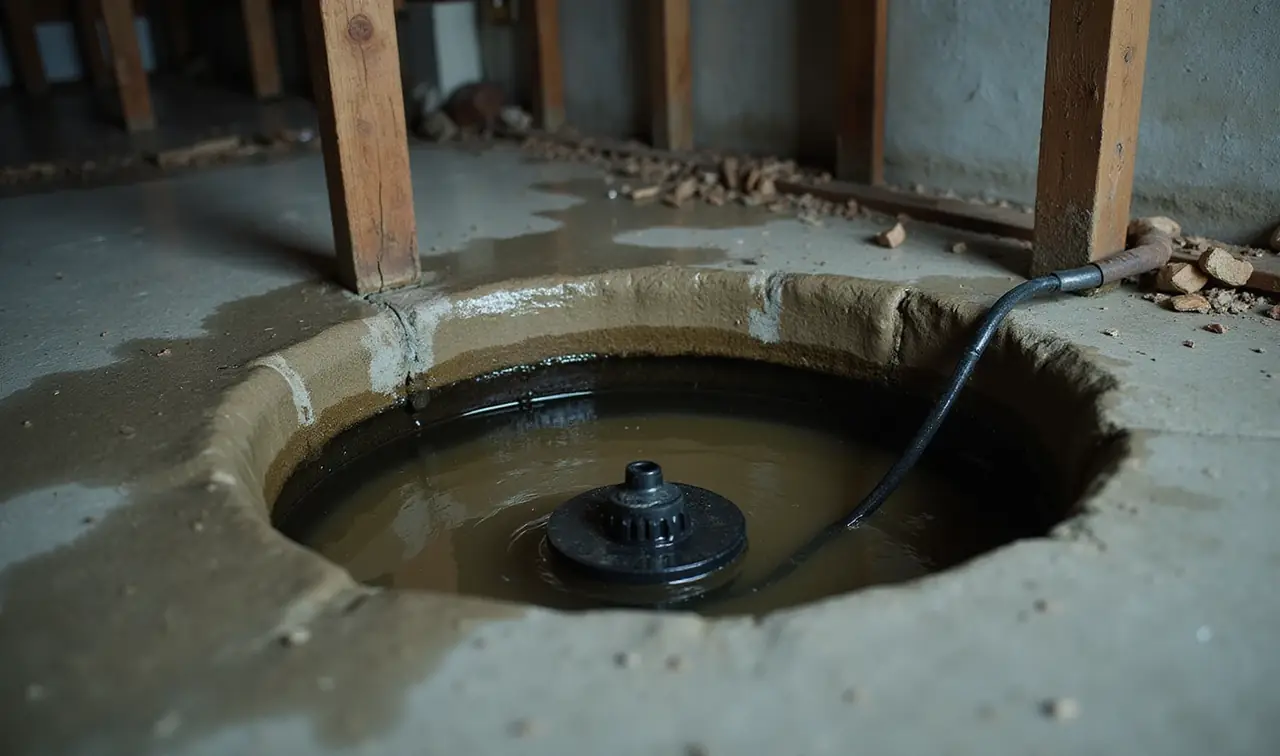
When a sump pump fails and your basement starts to flood, shut off the water source if you can, keep out of the water if it touches outlets or cords, and get the standing water out fast. Every hour the water sits, it soaks deeper into carpet, drywall and framing, and mold can start within 24 to 48 hours.
Sump pump failure is a breakdown of the pump that moves groundwater out of a basement pit, which lets water rise onto the floor. In Layton it tends to strike at the worst moments: a spring melt off the foothills, a hard November freeze, or a power outage during a storm.
Why do sump pumps fail in Layton?
Sump pumps in Layton fail for a short list of reasons, and most of them are fixable once you know which one you have. The pump may have lost power, the float switch may be stuck, the intake may be clogged, or the discharge line outside may be frozen solid.
- Power loss: a tripped breaker, a tripped GFCI outlet or a storm outage. Without a battery backup, the pump goes quiet exactly when the water rises.
- Stuck float switch: the float wedges against the pit wall and never signals the pump to start.
- Clogged intake or failed check valve: silt and gravel jam the impeller, or water drains back into the pit after each cycle.
- Frozen discharge line: ice blocks the pipe outside, and the pump pushes against a plug.
- Age: most pumps wear out in roughly 7 to 10 years.
- Overload: a pump sized for ordinary seepage cannot keep up with a surge of snowmelt.
Homes in Layton built in the 1970s through the 1990s often have a single pump, no backup and a pit that was never inspected. If yours falls in that group, treat any basement dampness as a warning.
Winter adds its own failure mode. When the discharge pipe outside freezes, the pump keeps running against a plug, overheats and quits, and the first sign is often water at the pit rim. Insulating or sloping the exposed pipe and keeping the outlet clear of snow and ice cuts that risk.
What should you do first when the basement floods?
When a basement floods from a failed sump pump, your first priority is safety, and your second is stopping more water from coming in. Work through the steps below in order.
- Stay out of the water if it reaches outlets, appliances, extension cords or the electrical panel. Electricity and water together can kill, so do not wade into a basement with live power.
- If the breaker panel is in a dry spot and you can reach it without stepping into water, switch off power to the basement. If you cannot, call your utility or an electrician before going down.
- Check the obvious causes from a dry position: is the pump plugged in, is the GFCI tripped, is the discharge line outside blocked or frozen?
- Photograph and video the water level, the pit and the damaged items before anything is moved.
- Carry out valuables, papers and electronics only if the path is dry and safe.
- Call for help with water removal rather than waiting for the pump to restart on its own.
Treat the water as unsanitary. Groundwater picks up soil, fertilizer and bacteria, and if a floor drain or sewer line backed up as well, the water may be Category 3, which means it can carry sewage and should not be touched without protective gear.
How much water is in a flooded basement?
A flooded basement holds far more water than it looks like, and the volume explains why household tools stop working. One inch of water across a 1,000 square foot basement is about 620 gallons, and six inches is nearly 3,700 gallons.
A shop vacuum handles puddles. Once water is several inches deep, a restoration crew uses submersible pumps and truck-mounted extraction, and that is where Water Extraction in Layton comes in: pumping down the standing water first, then pulling moisture out of carpet, pad and the slab.
Drain the basement gradually if water is also standing outside. Pumping a basement dry while the soil around the foundation is saturated can put pressure on the walls, so extraction in that situation is typically staged.
What happens after the standing water is gone?
After the standing water is out of a Layton basement, the structure still holds moisture that needs to be dried out in stages. Wet carpet pad, soaked insulation and saturated drywall often have to come out, because they stay wet for days and feed mold.
Restoration pros commonly set air movers and LGR dehumidifiers, open wall cavities when needed, and track progress with a moisture meter. Drying typically takes 3 to 5 days, and indoor relative humidity should settle back into the 30 to 50 percent range before the space is closed up.
The full scope is described on the page for Basement Flood Cleanup in Layton, which walks through extraction, removal of unsalvageable materials, drying, cleaning and sanitizing.
Keep notes as the job moves along. Record the date and time the water was found, the depth you measured and when the pump last worked, because those details help both the restoration crew and anyone reviewing a claim later.
How fast does mold grow after a basement flood?
Mold can begin to grow on damp basement materials within 24 to 48 hours, so a flood that sits over a weekend is already a mold risk. Basements make it worse because they stay cool, dark and humid, and finished walls trap moisture behind the paint.
If you see fuzzy spots, smell a musty odor or find staining on baseboards after the water is gone, the moisture is still in the structure. In that case Mold Remediation in Layton is a separate step from drying: containing the area, removing affected materials and cleaning the surfaces that remain.
Is sump pump failure covered by insurance?
Sump pump failure is often not covered by a standard homeowners policy, but it may be covered if you have a water backup or sump pump overflow endorsement. Policies differ, so this is general guidance, and your own policy and agent give the real answer.
Photographs, receipts and moisture readings all help a claim, so keep them. If you do not have the endorsement yet, ask your agent about adding it before the next thaw, because it is rarely available after a loss has started.
Why do basements near Syracuse and Centerville flood differently?
Basements across Davis County flood for different reasons depending on where the house sits. Homes on the foothill benches in East Layton and Centerville deal with snowmelt and runoff coming downhill, while homes on the flatter west side toward Syracuse sit closer to the water table, which can rise in wet years.
Both settings ask a lot of a sump pump. The local pages for Water Damage Restoration in Syracuse and Water Damage Restoration in Centerville cover how these conditions show up in each town.
How can you stop sump pump failure before it happens?
You can prevent most sump pump failures with a twice-a-year check and a backup plan. Test the pump in early spring and again in late autumn, before the first hard freeze.
- Pour a 5-gallon bucket of water into the pit and confirm the pump starts, empties it and shuts off.
- Clean debris out of the pit and make sure the float moves freely.
- Install a battery backup or a water-powered backup pump.
- Point the discharge line away from the foundation, commonly at least 10 feet, and check that it drains downhill.
- Add a high-water alarm so you hear about trouble before you see it.
- Plan to replace the pump around the 7 to 10 year mark.
Common mistakes after a sump pump failure
The most common mistake after a sump pump failure is going into the basement before the power is dealt with. The second is waiting for the water to dry by itself.
- Wading through water while outlets or cords are submerged.
- Replacing the pump and ignoring wet drywall and insulation.
- Running a household fan only, which moves damp air without removing moisture.
- Throwing out damaged items before photographing them.
- Leaving carpet pad in place to "dry out."
When to call a professional
Call a water damage restoration professional when water in the basement is deeper than a couple of inches, when it has been sitting for more than a day, or when it touched carpet, drywall or stored belongings. A wet vacuum cannot reach moisture inside the walls and under the flooring.
Water Cleanup Layton is a referral line that connects you with an independent local restoration company, and that company handles the pumping, drying and monitoring. If the cause was a sewer backup, say so on the call so the right equipment and protective gear are planned.
Get help with Water Damage Restoration in Layton
A flooded basement does not wait for a convenient time. Call (385) 481-3042 and we connect you with a local water damage restoration company.