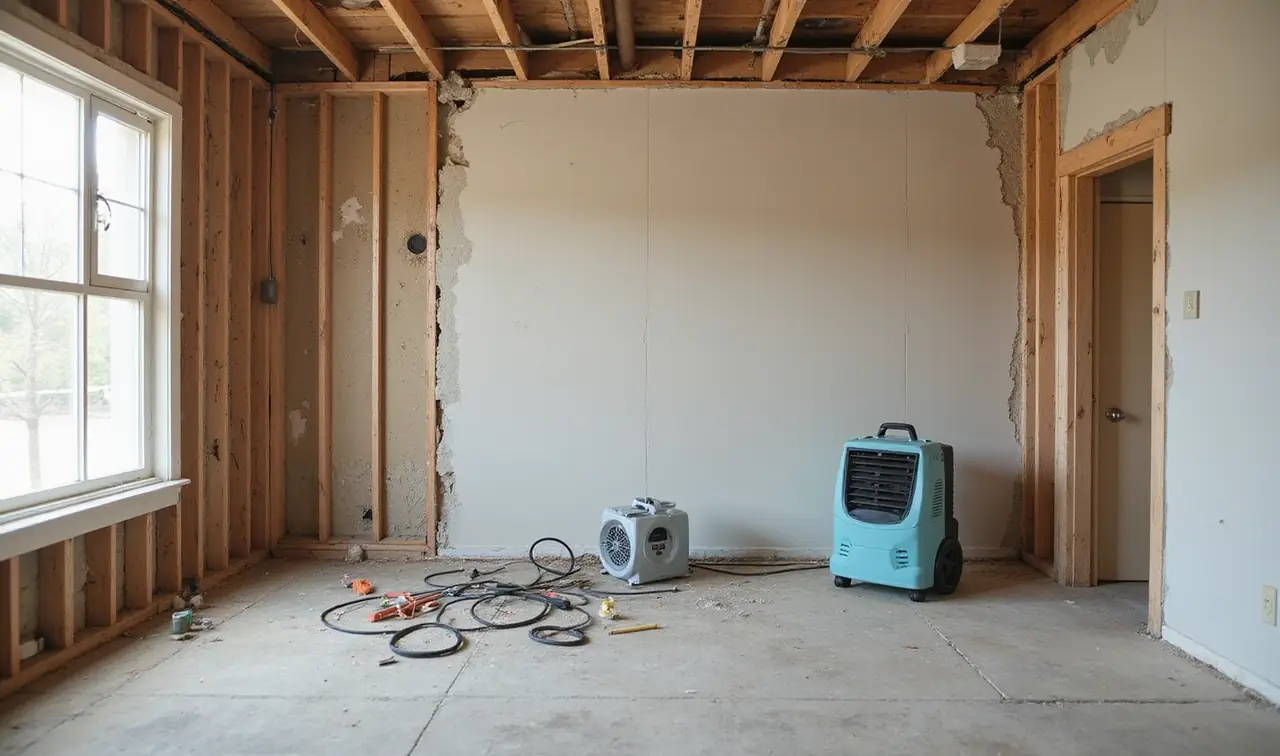
Water mitigation is the emergency work that stops water damage from spreading, and restoration is the repair work that returns the building to its pre-loss condition afterward. Mitigation comes first and usually takes a few days, while restoration can take weeks. If a pipe splits in your Layton home, mitigation protects what is still salvageable and restoration rebuilds what was lost. This post explains where one stops and the other starts, why the split matters for insurance, and how to tell which stage you are in.
What is the difference between water mitigation and restoration?
The difference between water mitigation and restoration is timing and purpose: mitigation limits the damage in the first days, and restoration repairs the damage that remains. Both are part of the same job, and a good crew treats them as one sequence.
Water mitigation is a set of emergency steps that stops the source, removes standing water, and begins drying so damage does not grow. Think of it as stopping the bleeding. Restoration is the surgery and recovery that follows.
- Mitigation: shut off the source, extract water, remove soaked materials that cannot be saved, set drying equipment, and monitor moisture.
- Restoration: replace drywall and insulation, repair or replace flooring and cabinets, paint, and rebuild finished areas.
Some losses need only mitigation. A clean-water leak caught within hours may dry out with no rebuild at all.
What does water mitigation include?
Water mitigation includes stopping the water, removing it, and drying the structure, usually over 3 to 5 days. The goal is to keep wet materials from turning into larger, more expensive problems.
- Source control. The water is shut off at the valve or main, and the failed line is isolated.
- Water removal. Pumps and extractors pull standing water. This is the same service described under Water Extraction in Layton, and the sooner it happens the less water soaks in.
- Removal of unsalvageable material. Wet carpet pad, soaked insulation, and saturated drywall are cut out so the structure can dry.
- Structural drying. Air movers and LGR dehumidifiers run while moisture meters track progress.
- Protection and documentation. Photos, moisture logs, and inventories are kept for the insurance claim.
Mold can begin in 24 to 48 hours in damp material, which is why mitigation cannot wait for the claim to be settled.
What does water damage restoration include?
Water damage restoration includes the repairs and rebuilding that follow mitigation: drywall, insulation, flooring, cabinets, paint, and trim. It starts only after moisture readings show the structure is dry.
Restoration can be as small as patching and painting a section of wall, or as large as rebuilding a finished basement. Timing depends on materials, supplier schedules, and approvals. A simple repair may take a few days, and a full rebuild can run 2 to 4 weeks or longer.
Restoration also covers cleaning of contents, deodorizing, and in some cases pack-out of belongings. If mold has grown in the meantime, Mold Remediation in Layton becomes a separate step before new materials go in.
Why does the split matter for your insurance claim?
The split between mitigation and restoration matters for insurance because many policies expect you to take reasonable steps to limit damage right away, and they treat emergency drying and repairs as different parts of the claim. Mitigation costs are often documented and approved separately from rebuild costs.
Keep three things for your adjuster:
- Photos and video of the damage before anything is removed.
- Daily moisture readings and equipment logs.
- A list of materials removed and the reason each was removed.
Those records show what was done in the first days to protect the home. Waiting for approval before starting mitigation is a common mistake, because damage grows in the meantime and a growing loss is harder to claim.
For active, fast-moving losses, Water Mitigation in Layton is the place to start, and rebuilding questions can wait until the structure is dry.
What does the difference look like in a Layton home?
In a Layton home, the difference shows up clearly after a winter freeze: mitigation is the first week of water removal and drying, and restoration is the weeks of rebuilding that follow. Take a split supply line in a basement wall.
During mitigation, the water is shut off, the carpet and pad are pulled, the bottom 2 feet of wet drywall is cut out, and dehumidifiers run for 3 to 5 days. During restoration, new drywall goes up, the wall is painted, and new flooring is installed. The same pattern applies from East Layton homes on the benches to older central Layton houses.
The pattern repeats in nearby cities. Homeowners in Clearfield deal with the same freeze risk in older homes, and a property owner reading about Water Damage Restoration in Clearfield will recognize the same two-stage process. Syracuse homes with higher groundwater see a similar sequence after spring seepage, which is why Water Damage Restoration in Syracuse work also begins with drying before any rebuild.
Who does mitigation and who does restoration?
Mitigation is usually done by a water damage restoration crew, and restoration may be done by the same company or by a general contractor you choose. The two do not have to be the same business.
Some homeowners prefer one company for both, which simplifies scheduling and records. Others use a restoration crew for drying and a local contractor for the rebuild. Either approach works as long as the handoff is clean and the moisture readings are documented.
Water Cleanup Layton connects you with an independent local restoration company, so you can start mitigation with a single call and decide about the rebuild once the structure is dry.
What affects the cost of mitigation and restoration in 2026?
The cost of mitigation and restoration in Layton in 2026 depends on the size of the affected area, the water category, the drying time, and the materials that need to be replaced. Mitigation cost tracks equipment days and labor, while restoration cost tracks materials and finish work.
- Affected area: more square feet of wet floor and wall means more equipment and more material to replace.
- Water category: clean water is simpler than grey water or sewage, which adds protective steps and disposal.
- Drying days: a loss that needs 5 days of equipment costs more than one that dries in 3.
- Materials: hardwood, custom cabinets, and plaster cost more to replace than carpet and standard drywall.
- Mold: growth that has already started adds containment and cleanup.
The easiest way to keep restoration costs down is to make mitigation fast. Every day that water sits, more of the building moves from the dried-in-place column to the replace column.
What happens on day one of mitigation?
On day one of mitigation, a crew stops the source, extracts standing water, removes materials that cannot be saved, and sets drying equipment. The first day sets the schedule for everything after it.
A typical sequence looks like this: moisture mapping to find where water traveled, extraction of standing water, removal of wet pad and damaged drywall, placement of air movers every 10 to 16 feet along wet walls, and dehumidifiers sized to the space. Readings are logged so each following day can be compared against the first.
Homeowners can help by clearing small items from the floor, taking photos before and after removal, and keeping pets and children out of the work area. Nothing else is needed from you. The job is hands-on for the crew and mostly waiting for you.
Common mistakes when mixing up mitigation and restoration
The most common mistake is rebuilding before mitigation is finished. New drywall and flooring over wet framing seal moisture in and invite mold.
- Hiring a contractor to rebuild before moisture readings are dry.
- Waiting for an adjuster before starting mitigation.
- Stopping drying equipment early because it is loud.
- Assuming a dry surface means a dry wall cavity.
- Throwing away materials without photos.
- Treating a sewage loss like a clean leak. Contaminated water needs removal of porous materials first.
When to call a professional
You should call a professional as soon as water reaches carpet, drywall, or a basement slab, because mitigation works best in the first 24 to 48 hours. A small spill you can mop is one thing. Water soaking into building materials needs equipment and moisture readings.
Water Cleanup Layton connects you with an independent local restoration company that can begin mitigation, so you are not guessing about what is still wet.
Frequently Asked Questions
These are the questions Layton homeowners ask most often about mitigation and restoration.