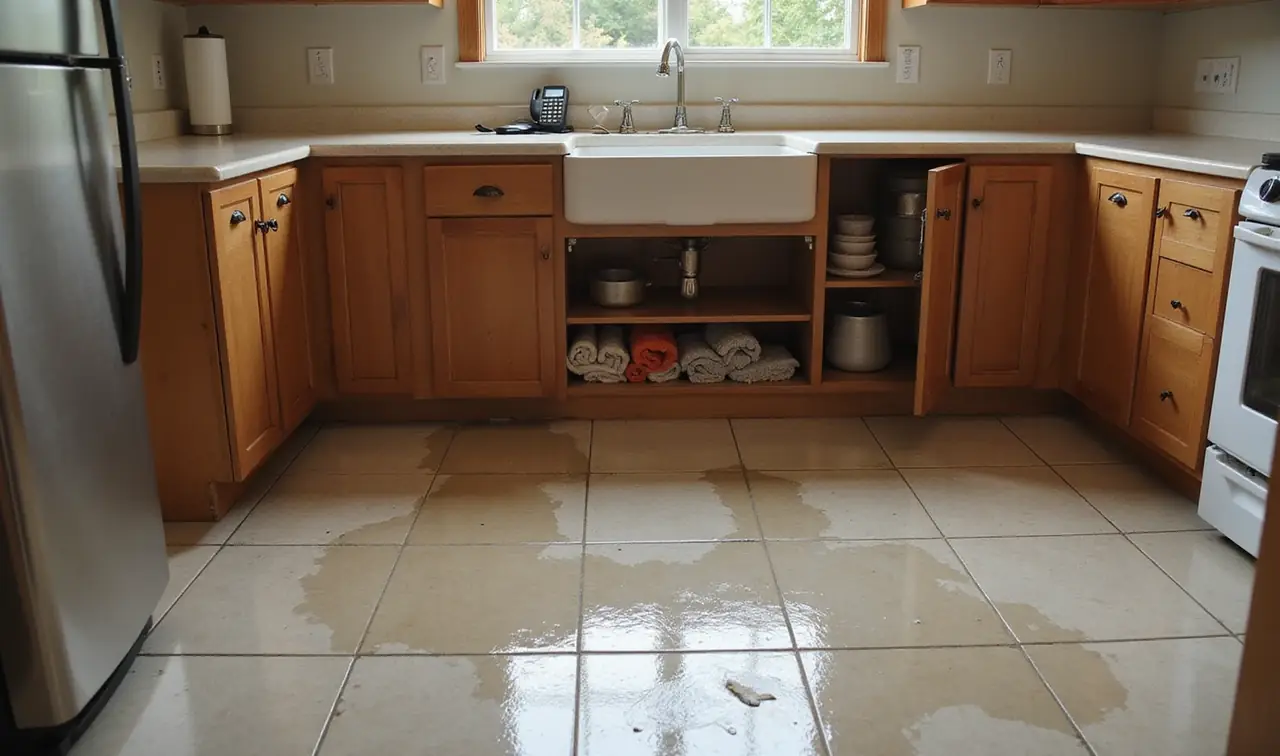
For water damage in Layton, call a water damage restoration company first, then your insurance company, and call a plumber only if a pipe or fixture needs repair. The restoration company removes the water and dries the structure, which is what keeps a small loss from becoming a mold and rebuild project. This post lays out who handles which part of the job, what to do in the first hour at home, and how to judge a company before you hand over the keys.
Who should you call first for water damage in Layton?
The first call for water damage in Layton should go to a restoration company, because water removal and drying are time-sensitive and nobody else on the list does them. Plumbers, insurers, and contractors each play a part, but the clock runs against wet drywall, carpet, and framing.
Here is how the roles split:
- Restoration company: extracts water, dries the structure, monitors moisture, and handles cleanup of wet materials.
- Plumber: finds and repairs the failed pipe, valve, water heater, or fixture.
- Insurance company: opens the claim, sends an adjuster, and pays covered repairs.
- General contractor: rebuilds what had to be removed, once everything is dry.
Water damage restoration is the process of removing water, drying a building, and cleaning or replacing what was damaged so the structure returns to its pre-loss condition. Water Cleanup Layton is a call line that connects you with an independent local restoration company, so one call starts that first step.
What should you do in the first hour after water damage?
In the first hour after water damage, stop the source, protect yourself from electrical hazards, and photograph the damage before anything is moved. Then call for help. You do not need to fix anything else yourself.
- Stop the water. Turn off the main shutoff or the valve to the fixture. Know where the main is before winter, not during an emergency.
- Watch for electricity. If water is near outlets, appliances, or the panel, stay out of the room and leave power off at the breaker only if you can reach it dry.
- Keep people and pets out of wet rooms, especially if the water came from a toilet or drain.
- Take photos and video of the water line, damaged items, and the source.
- Move small valuables to a dry room if it is safe to do so.
- Call a restoration company and then your insurer.
If you see a ceiling bulging or sagging with water, leave it alone and stay out from underneath it. Do not poke or cut it. A restoration crew has the equipment and training to release trapped water in a controlled way.
What water damage calls come in during a Utah winter?
Winter water damage calls in Layton are mostly burst pipes, frozen supply lines, and failed water heaters, and they spike after the first hard freeze of the season. Since it is November, the risk window is opening now.
A frozen pipe that splits behind a wall can release gallons an hour once it thaws. When that happens, a restoration crew handling Burst Pipe Water Damage in Layton pulls out the water, opens the wall, and dries the cavity while a plumber replaces the section.
Other winter causes include ice dams that push meltwater under shingles, overloaded gutters, and the first thaw that sends snowmelt toward basement window wells. Spring runoff off the East Layton benches then repeats the cycle with groundwater.
When is water damage an emergency?
Water damage is an emergency when water is still flowing, when it has reached electrical outlets or a ceiling, or when it has been sitting on carpet and drywall for more than a few hours. Mold can start in 24 to 48 hours, so waiting overnight changes the job.
These signs mean call right away:
- Standing water deeper than a quarter inch across a room.
- Water coming from a ceiling or light fixture.
- Wet drywall that feels soft or is changing color.
- A musty smell that appeared after a leak.
- Sewage or dark water from a drain or toilet.
For active leaks and fast-spreading losses, Emergency Water Damage in Layton work focuses on stopping the spread first and sorting out the rest afterward.
Do you call a different company in Kaysville, Syracuse, or Farmington?
Homeowners in Syracuse, Farmington, and the rest of Davis County do not need a different process, because the same restoration steps apply on every street from Layton to Centerville. The difference is that a local company knows the housing and the weather near you.
Syracuse sits on flatter ground west of Layton where the water table is higher, so basement seepage shows up there in wet springs, and a homeowner reading about Water Damage Restoration in Syracuse often has a sump pump story to go with it. Farther south, hillside lots in Farmington create runoff paths that push water toward foundations, which is why Water Damage Restoration in Farmington calls often involve window wells and exterior grading.
How do you choose a restoration company?
You choose a restoration company by asking what equipment they bring, how they document drying, and who will be at your home. Strong answers are specific. Vague answers are a warning.
Ask these questions:
- Do they use moisture meters and a thermal camera to find hidden water?
- Will they set air movers and dehumidifiers and take readings each day?
- Do they follow the IICRC S500 standard for water damage restoration?
- Can they explain what will be removed and what will be dried in place?
- Will they work with your insurance adjuster and provide drying records?
A job that ends without moisture readings is a job you cannot prove is dry. Drying commonly takes 3 to 5 days, and the daily readings show when the structure has reached its target.
What happens after you call a restoration company?
After you call a restoration company, a crew typically assesses the damage with moisture meters, removes standing water, sets drying equipment, and returns daily to check readings until the structure is dry. The sequence is the same in a small bathroom leak and a flooded basement, only the scale changes.
- Assessment. The crew finds where water traveled, including inside walls and under flooring, and classifies the water as clean, grey, or contaminated.
- Water removal. Pumps and extractors pull standing water, and wet carpet pad is usually removed.
- Drying setup. Air movers and LGR dehumidifiers run to pull moisture from materials, often for 3 to 5 days.
- Monitoring. Moisture readings are taken each day and recorded, so you and your adjuster can see progress.
- Cleanup and handoff. Equipment comes out when readings reach the dry standard, and rebuild work can begin.
That drying record matters for insurance and for any later sale of the home.
What affects the cost of water damage restoration in 2026?
The cost of water damage restoration in Layton in 2026 depends on how much water there is, how long it sat, what type of water it is, and which materials it reached. No two losses are alike, so a fair assessment comes after someone has looked at the home.
- Square footage affected: a single room costs less to dry than a whole finished basement.
- Water category: clean supply water is simpler than sewage, which needs removal of porous materials.
- Materials: carpet over concrete dries differently than hardwood or plaster.
- Drying days: more days of equipment and monitoring mean a larger job.
- Mold: growth that has already started adds containment and cleanup.
Starting early is the biggest lever you control. Water caught in the first day usually means fewer materials removed and fewer days of drying.
Common mistakes when calling for water damage help
The most common mistake after water damage is calling a contractor to rebuild before anyone has dried the structure. New drywall over wet framing locks in a mold problem.
- Calling only the plumber and skipping the drying.
- Waiting for the adjuster before starting water removal.
- Running the furnace or fans on a sewage backup, which spreads contamination.
- Throwing away damaged items before photographing them.
- Choosing a company only because it answered first, without asking about equipment or drying records.
- Ignoring a musty smell weeks later. That is often hidden moisture, and Mold Remediation in Layton is a bigger job than catching it early.
When to call a professional
You should call a professional any time water has reached more than a small area, has been there for more than a few hours, or came from a toilet, drain, or outdoors. Small spills on a hard floor you can mop up yourself. Anything soaking into carpet, drywall, or a basement slab is a restoration job.
Water Cleanup Layton connects you with an independent local restoration company, so one call to the number below starts the process while you handle the insurance side.
Frequently Asked Questions
These are the questions Layton homeowners ask most often when water damage hits.